
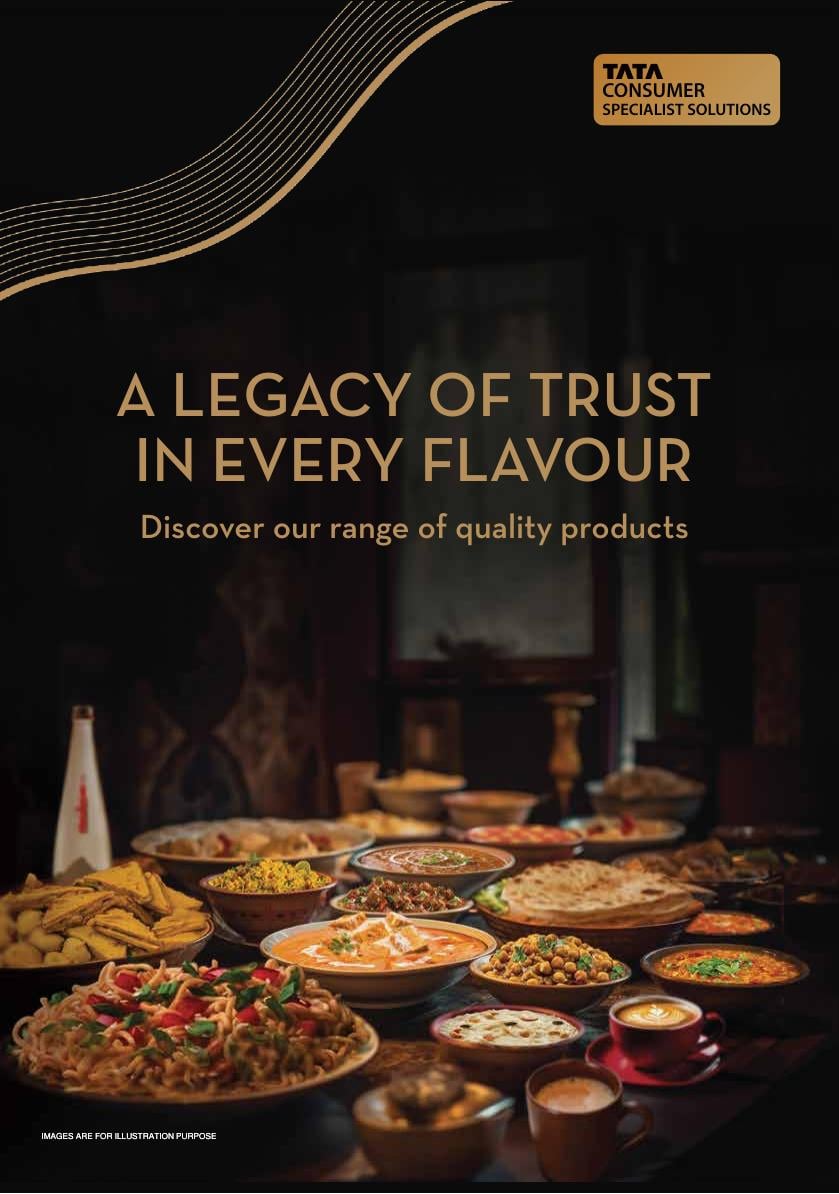
Most cloud kitchens use a ready-made gravy base for cloud kitchens as the foundation of their production model — not as a shortcut, but as a deliberate quality-control decision. When a single kitchen runs three or four virtual brands simultaneously, a handmade base that varies with each cook's instincts becomes a liability. Ready-to-use gravies and concentrated pastes eliminate that variable, letting your team focus energy on the finishing touches that actually differentiate a dish.
Do Cloud Kitchens Use Ready-Made Gravy Bases or Make Everything from Scratch?
The majority of high-volume delivery kitchens use a hybrid model: a commercially prepared base gravy handles the labour-intensive foundation, while the kitchen's own spice finishing, garnish, and protein preparation define the brand identity. Scratch cooking for every base is viable at low volumes — ten covers a night is very different from two hundred. At scale, the time cost of chopping, roasting, blending, and straining onion-tomato masala repeatedly through a shift adds up in ways that threaten both margins and consistency. Ready-made bases shift that burden to a controlled manufacturing environment where batch-to-batch variation is tightly managed.
This does not mean ready-made and scratch are mutually exclusive. Many operators use a concentrated paste for their makhani or dal makhani base and cook their own tarka from whole spices on top. The result is a dish that is reliably reproducible and still carries the kitchen's signature.
Which Ready-Made Gravy Base Helps Maintain Consistency Across Multiple Virtual Brands?
The right product depends on your menu architecture. Tata Yumside, which SGS Sales distributes across UP and Uttarakhand, covers the core Indian and Indo-Chinese profiles a cloud kitchen needs: makhani, dal makhani, onion-tomato, brown gravy, yellow gravy, white gravy, manchurian, schezwan, and cashew paste. Having a single supplier for this range matters operationally — you standardise your ordering, your storage, and your team's familiarity with the products.
For a kitchen running a North Indian brand alongside an Indo-Chinese brand, Yumside's onion-tomato base feeds one menu while the schezwan and manchurian pastes anchor the other — all from the same product family, the same shelf position in your cold store, the same reorder process. Consistency across brands begins with consistency in your supply chain.
How Do I Use a Concentrated Gravy Paste — What Is the General Approach?
Concentrated pastes are designed to be thinned with a liquid and enriched with fat before adding your protein or vegetable. The standard method is to heat oil or butter in a heavy-bottomed pan, add the paste, and cook it briefly to activate the aromatics — sometimes called "frying the paste." Water, stock, or cream is then added gradually to achieve the desired consistency, and the gravy is simmered to let the flavours integrate. The correct dilution for any specific product is printed on the commercial packaging; always follow the manufacturer's guideline rather than estimating.
The finishing layer — a squeeze of cream, a bloom of whole spices, a kasoori methi crumble — is where your kitchen's identity enters the dish. A well-executed finish on a quality base is indistinguishable from a fully handmade gravy to most guests.
Will Guests Be Able to Tell If I Am Using a Ready-Made Gravy Base?
In most cases, no — provided the base is finished correctly. The characteristics guests associate with a "homemade" taste are largely in the finishing: the depth of the tadka, the freshness of cream or butter added at the end, the texture of the protein, and the heat level. A professionally manufactured base from a brand like Tata Yumside is formulated to taste like a well-cooked restaurant masala because it is made by food technologists who reverse-engineer exactly that result.
Where ready-made bases fall short is when they are used straight from the pouch with no finishing — undercooked, under-spiced, and served without any kitchen signature. That is a preparation failure, not a product failure. Treat the base as your mise en place, not your final dish.
Are Ready-Made Gravy Bases FSSAI Compliant and Safe for a Licensed Cloud Kitchen?
Yes. Tata Yumside products, like all commercially sold food products in India, carry FSSAI licence numbers on their packaging and are manufactured under food safety standards that meet or exceed what a cloud kitchen is required to maintain in its own kitchen. Using a commercially licensed, FSSAI-approved product is generally a lower food-safety risk than a handmade base, because commercial production involves documented process controls, lab testing, and defined shelf lives.
For your own compliance, keep the original packaging or maintain a record of the product's FSSAI number in your ingredient register. During inspections, being able to show that your base ingredients come from licensed manufacturers strengthens your documentation. Restaurant and cloud kitchen operators we supply across the region routinely use Yumside bases without any compliance concern.
What Is the Cost Trade-Off Between In-House Base Gravy Versus Ready-Made?
The honest answer is that in-house base gravy is rarely cheaper once all costs are counted. Raw material cost for onions, tomatoes, whole spices, and oil is only part of the equation. Add cook labour time — which on a busy prep day is your scarcest resource — plus fuel, cleaning time, and the cost of batch failures or inconsistency. A commercial paste converts a skilled cook's thirty-minute task into a two-minute measure-and-heat task. That freed time goes back into the dishes where craft matters: protein marination, bread, dessert, presentation.
There are contexts where in-house base is worth the effort — a flagship dal that is genuinely a differentiator, a slow-cooked preparation where the process itself is the product. But for the working gravies that underpin ten different dishes on a cloud kitchen menu, the operational maths typically favour a quality ready-made base. The key is sourcing from a manufacturer whose standards you trust.
How SGS Sales Supplies Cloud Kitchens Across UP and Uttarakhand
SGS Sales is an authorised distributor of Tata Consumer Products including Yumside, serving delivery kitchens, dark kitchens, restaurant groups, and caterers across Moradabad, the Kumaon belt, and the Jim Corbett corridor. Beyond gravies and pastes, we supply food-service disposables, paper products, and grocery staples — with our own delivery fleet handling last-mile logistics so your order arrives on a predictable schedule.
We also manufacture in-house: napkins, kitchen rolls, cutlery kits, and portion-pack sachets that cloud kitchen operators use for delivery packaging and presentation. Custom branding on packaging is available through our custom branding service — several cloud kitchen groups use branded napkins and sachets to extend their identity to the unboxing moment.
If you are setting up or scaling a cloud kitchen operation and want a single supplier for your base ingredients, packaging, and kitchen consumables, speak to our team to discuss your volume and delivery requirements.