
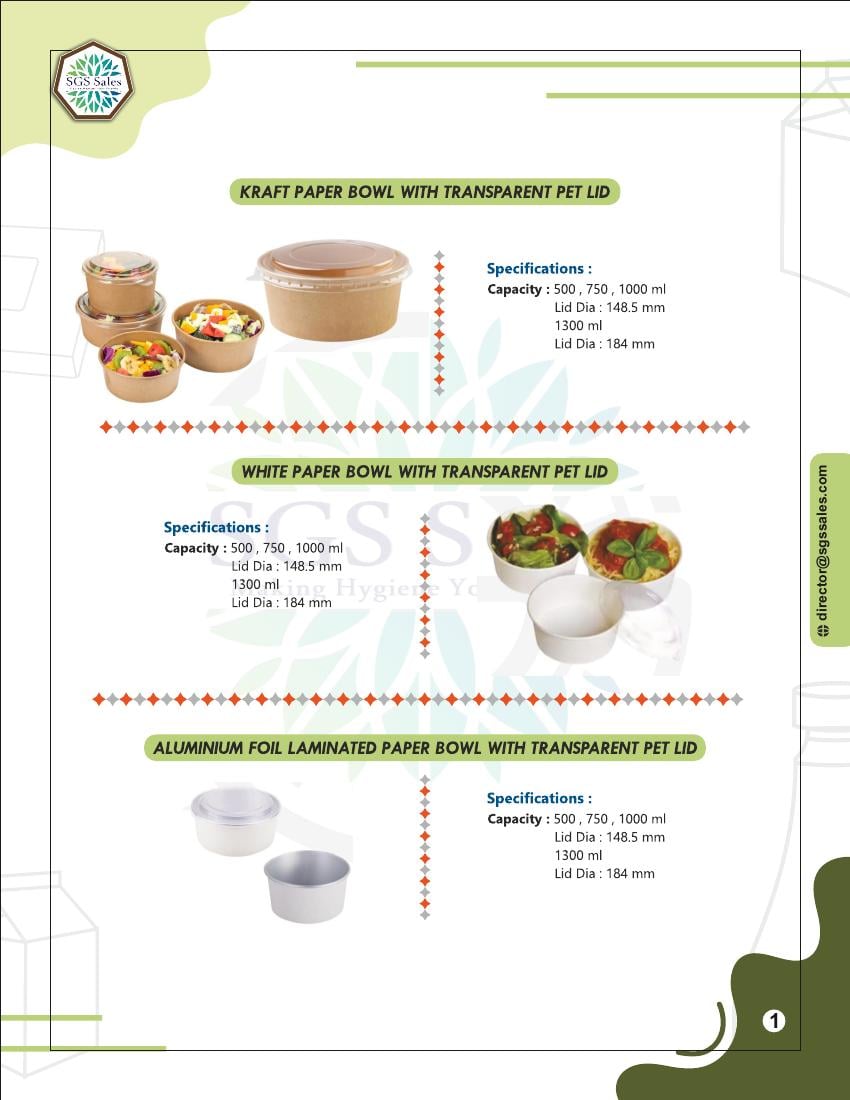
Match the material to the dish, not the eco label: thick gravies go in paper containers (we run 330 GSM paper with a double-layer lid), sambar and thin liquids go in plastic with a locking lid, and dry items go in bagasse or areca. Per bowl you're looking at ~₹0.60 plastic, ~₹1.25 cornstarch, ~₹1.25–1.30 bagasse, ~₹4 areca. Here's how each one actually performs and which claims are real.
The five materials, side by side
| Material | Composts? | Biodegrades? | Cost/bowl (~₹) | Best for | Weak point |
|---|---|---|---|---|---|
| Plastic | No | No | ~0.60 | thin liquids — sambar, rasam — with a locking lid | not eco; warps under very hot gravy if thin |
| Cornstarch | No | Yes | ~1.25 | our primary biodegradable line; general takeaway | not compostable, only biodegradable |
| Bagasse (sugarcane) | Yes | Yes | ~1.25–1.30 | dry and semi-dry dishes, thali trays | very hot oily gravy over long holds softens the base |
| Paper (330 GSM) | Yes | Yes | see food-box rates | thick gravies, dal makhani, wet curry | softens under long exposure to very hot liquid |
| Areca (palm leaf) | Yes | Yes | ~4 | premium plated look, snack plates | much higher cost — 3× bagasse |
Read the compost/biodegrade columns carefully, because this is where the market lies to you. Compostable (bagasse, paper, areca) means it breaks fully into non-toxic matter in a defined window. Biodegradable (cornstarch) means it breaks down eventually — no fixed timeline. Plastic is neither. "Biodegradable plastic" often just fragments into microplastic. For a hotel audit trail, read the standard on the box, not the marketing word.
Why we run cornstarch and not PLA
You'll see PLA (corn-derived bioplastic) pushed as the eco takeaway material. We don't stock it. PLA only composts in an industrial composting facility at controlled heat — which almost nowhere in the Moradabad–Corbett belt actually has — so in practice it lands in the same bin as regular plastic and behaves like it. Cornstarch is our biodegradable line instead: it breaks down in ordinary conditions without needing an industrial composter that doesn't exist here. If a rep is selling you PLA on its green credentials, ask where the nearest industrial composter is before you pay the premium.
Performance — what actually holds the dish
This is the part generic packaging blogs skip. After years of packing real orders for cloud kitchens and resorts on this belt:
- Thick gravies (dal makhani, butter chicken, wet curry) → paper containers. We use 330 GSM paper with a double-layer lid that seals better than a single snap lid. Paper reads premium and takes custom branding.
- Sambar, rasam, thin liquids → not paper. Paper softens under long exposure to very hot thin liquid and you get a leak by the time the delivery rider arrives. Use plastic with a locking lid — it holds the liquid and the lock stops the pop-off in transit.
- Dry and semi-dry sabzi, snacks, thali → bagasse or areca. Bagasse is the everyday choice; areca is for when the plated look justifies ~₹4 a piece.
- The honest limit on all paper and bagasse: very hot, very oily gravy held for a long time softens the base. For long transit times on wet dishes, that's why the locking-lid plastic still earns its place.
The India SUP rules — what's actually banned
Get this right, because a lot of hotels over-correct out of fear. India's Single-Use-Plastic ban targets specific items: plastic cutlery, plates, straws, stirrers, ear-buds, thermocol (EPS) decor, and plastic carry bags below 75 micron (120 micron from December 2022). That 75/120-micron threshold applies to carry bags, not food containers. Rigid plastic tubs and lids for packing food are still legal. What's out is thermocol plates and cutlery — that's the real reason properties are moving to bagasse, paper, areca and cornstarch. So you can keep the locking-lid plastic bowl for your sambar and still be compliant; it's the thermocol and the thin carry bag you replace.
What a mid-tier kitchen actually needs
Don't buy all five materials. A typical cloud kitchen or restaurant runs two lines: 330 GSM paper containers for the gravy dishes (branded, premium, the ones the guest photographs) and locking-lid plastic for the thin liquids and long-transit wet items. Add bagasse trays for thali and dry dishes if you want the compostable claim on the table. Areca only if your positioning justifies ~₹4 a plate — for most mid-tier menus it doesn't, and bagasse at a third the cost does the same job.
Cornstarch is the one to reach for when a client specifically wants "biodegradable" on the pack without the industrial-composter dependency PLA carries.
What to do next
- See the full range — paper containers, bagasse, areca, cornstarch and locking-lid plastic, each with a matching lid — on the food packaging page. Order lids to match or you'll be short.
- Tell us your menu split (how much gravy vs dry vs thin-liquid) and rough daily order volume, and we'll match the materials and sizes and quote plain vs custom-branded per piece.