Hotel Accessories
Lobby, Housekeeping & Public-Area Equipment.
The operational hardware that runs a hotel — bellman and luggage carts for the lobby, housekeeping, laundry and service trolleys for the floors, public-area and recycling bins, queue managers, signage, and podiums. Custom-logo options with no minimum order quantity.
About This Category
Operational Hardware That Keeps Your Hotel Running Smoothly
Hotel accessories are the working hardware behind a well-run property — the bellman carts that greet arrivals, the housekeeping and service trolleys that turn rooms and run F&B, the bins that keep public areas clean, and the queue managers and signage that organise the lobby. SGS Sales supplies the full operational equipment range from a single housekeeping-solution catalogue, in stainless steel, brass, powder-coated and plastic builds, with custom-logo branding available and no minimum order quantity — letting properties standardise their hardware through one accountable supplier. (Guest-room fixtures such as luggage racks, hangers, and in-room bins are on the Room Amenities page.)
Complete Product Range
15 Products. 6 Groups.
One B2B Source.
Lobby Equipment
Front-of-house equipment that shapes the arrival experience — luggage trolleys, bellman carts, hand trucks, and platform trucks in stainless steel, brass, and deluxe finishes.
Luggage Trolleys & Bellman Carts
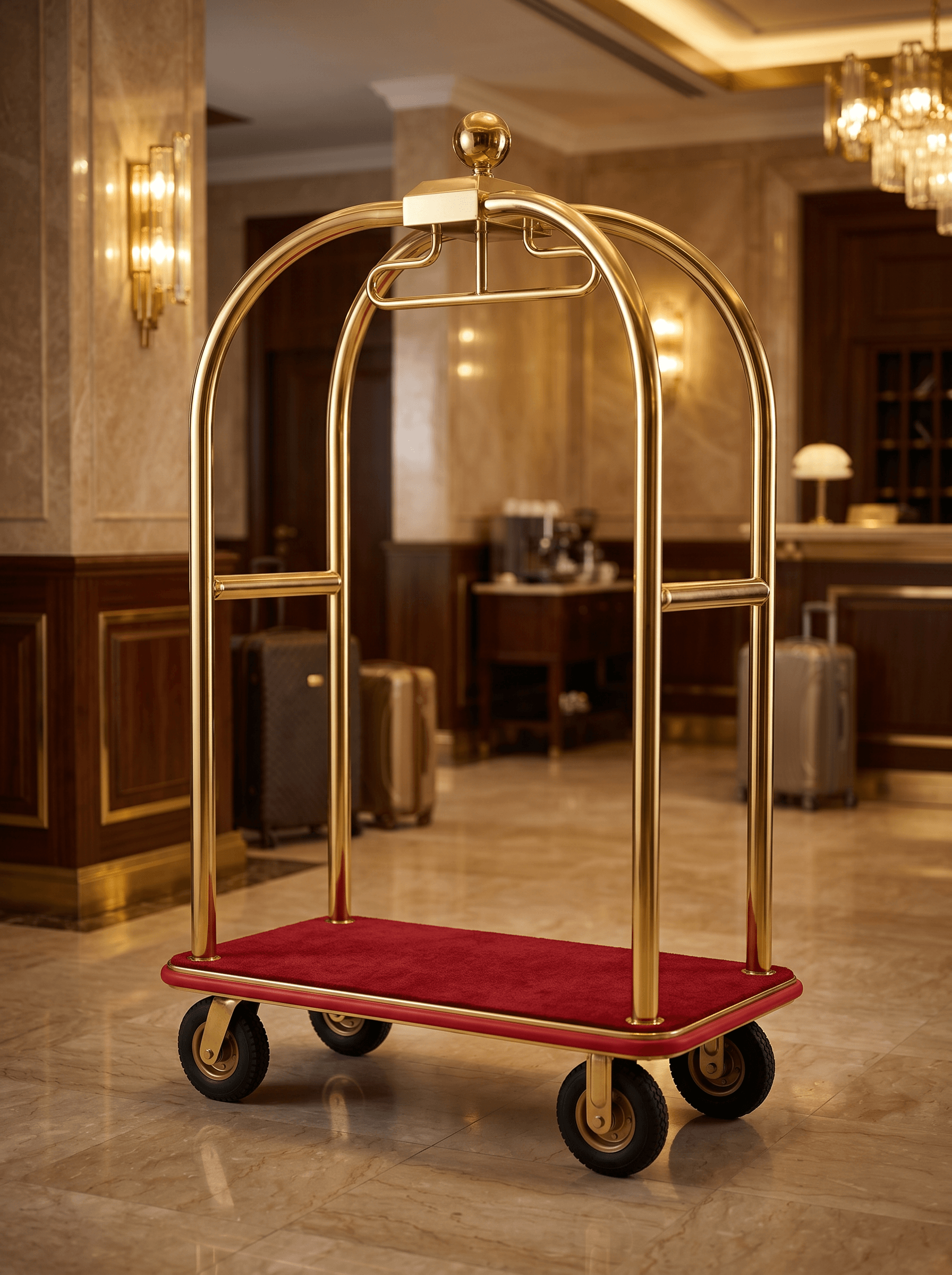
Stainless steel, SS Deluxe, and brass luggage trolleys and bellman carts — including the classic birdcage-style bellman cart — for hotel lobbies and porte-cochères. Carpeted decks with chrome, gold, or brass finishes to match your lobby. Custom logo available, no MOQ.
Luggage Hand Trucks & Platform Trucks
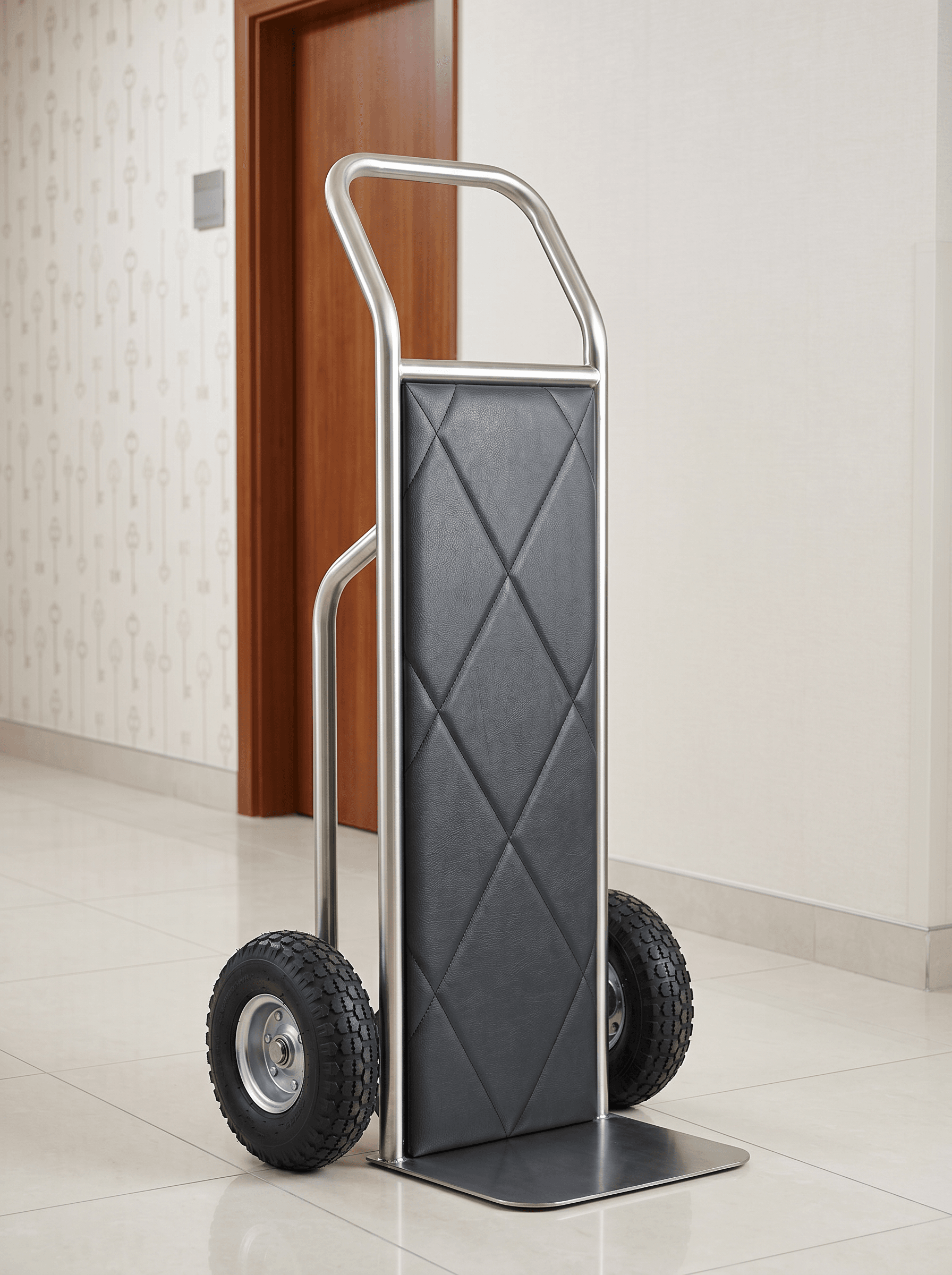
Stainless steel and SS Deluxe luggage hand trucks for bell-desk baggage, plus flatbed platform trucks for back-of-house movement of stores and equipment — built for daily porter use with padded backboards and heavy-duty wheels.
Housekeeping & Laundry Trolleys
Floor-service equipment for room turnaround — housekeeping (maid) carts and laundry/linen trolleys in wooden, steel, and canvas builds.
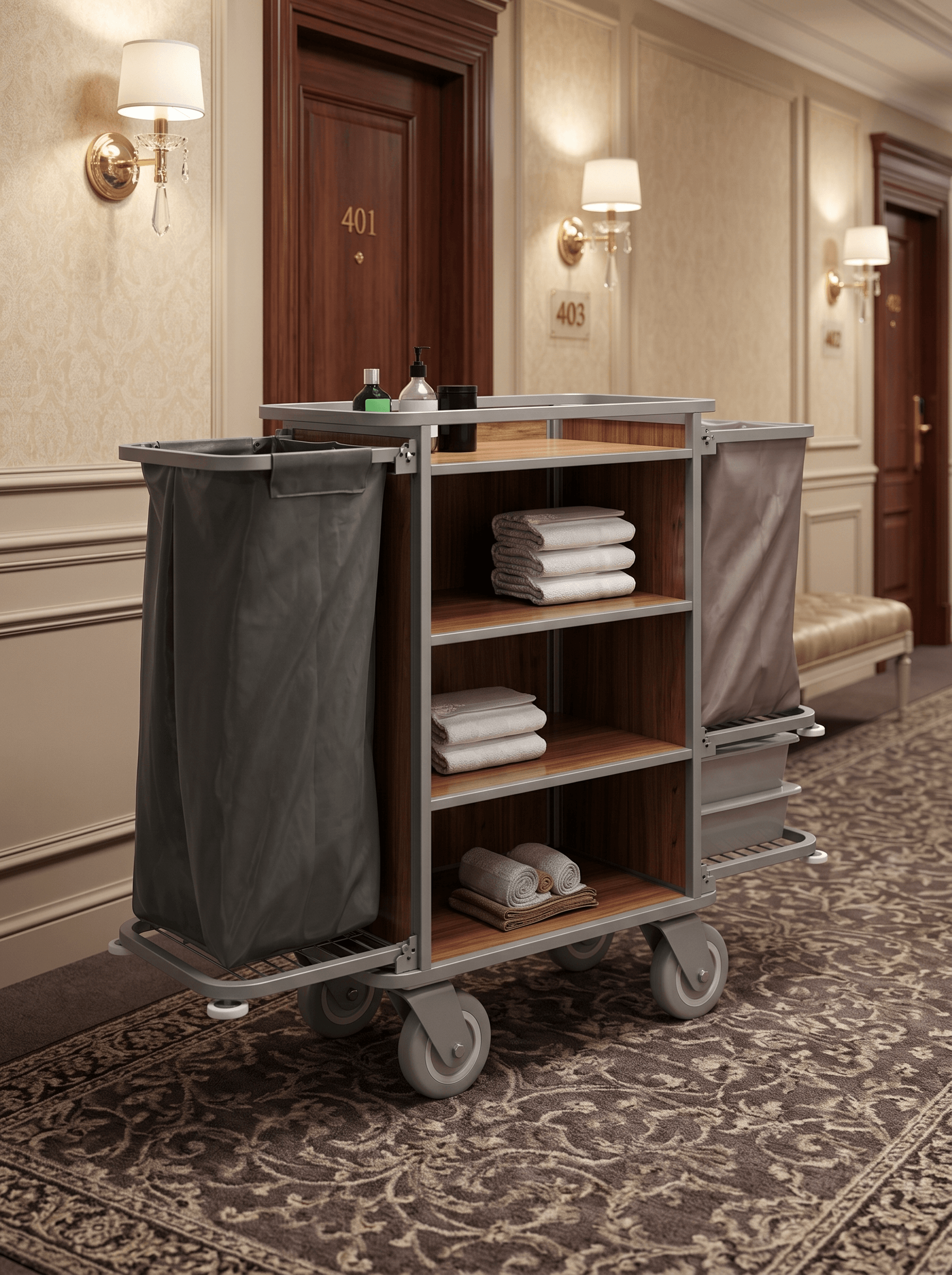
Housekeeping (Maid) Carts
Multi-shelf housekeeping carts in wooden and powder-coated steel finishes, with linen shelves and zippered collection bags for guest-room turnaround. Compact and full-size configurations to suit different corridor widths and room counts.
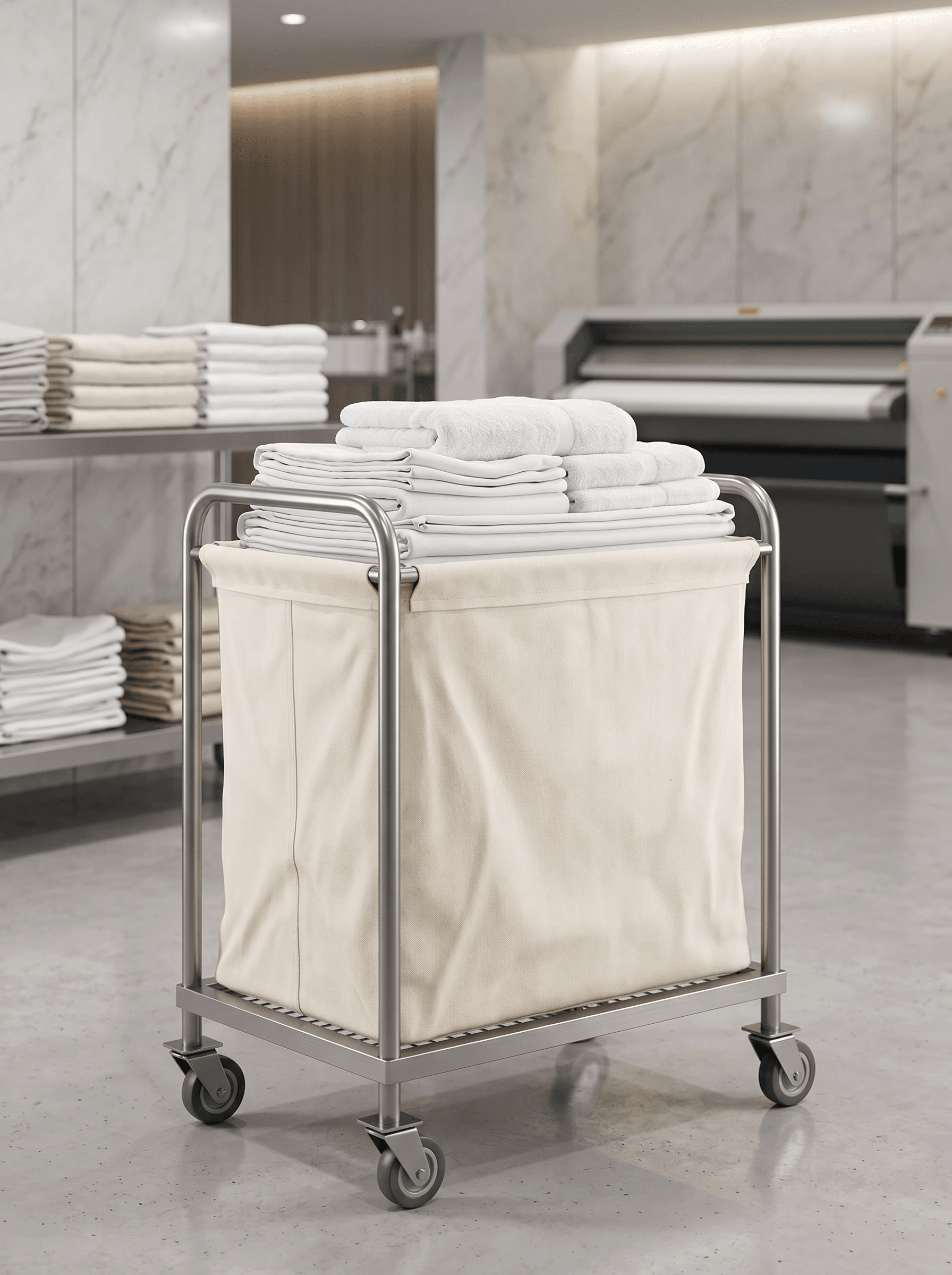
Laundry Trolleys & Linen Carts
Canvas-bag laundry trolleys (single, double, and triple bag), mesh roll containers, mini housekeeping trolleys, and powder-coated linen carts for moving soiled and fresh linen between floors and the laundry. Heavy-duty castors for loaded daily use.
Service & Food Trolleys
F&B and utility equipment — room-service trolleys, bar and liquor trolleys, plastic utility trolleys, and insulated food and drink carriers.
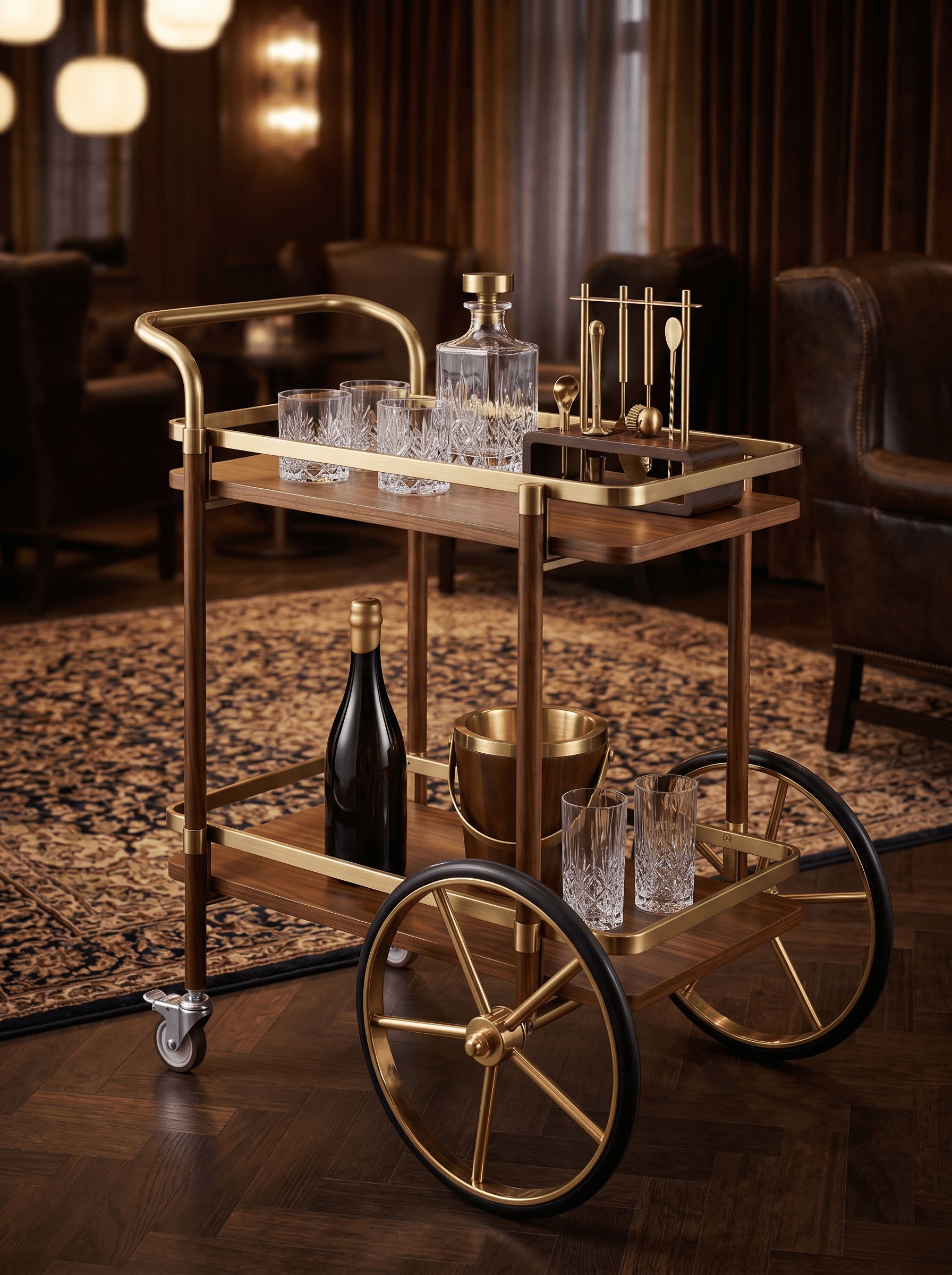
Room-Service & Bar Trolleys
Round, flip-top, and oval room-service trolleys for in-room dining, plus wooden and brass food & liquor (bar) service trolleys in two and three-tier builds for banquet, lounge, and poolside beverage service.
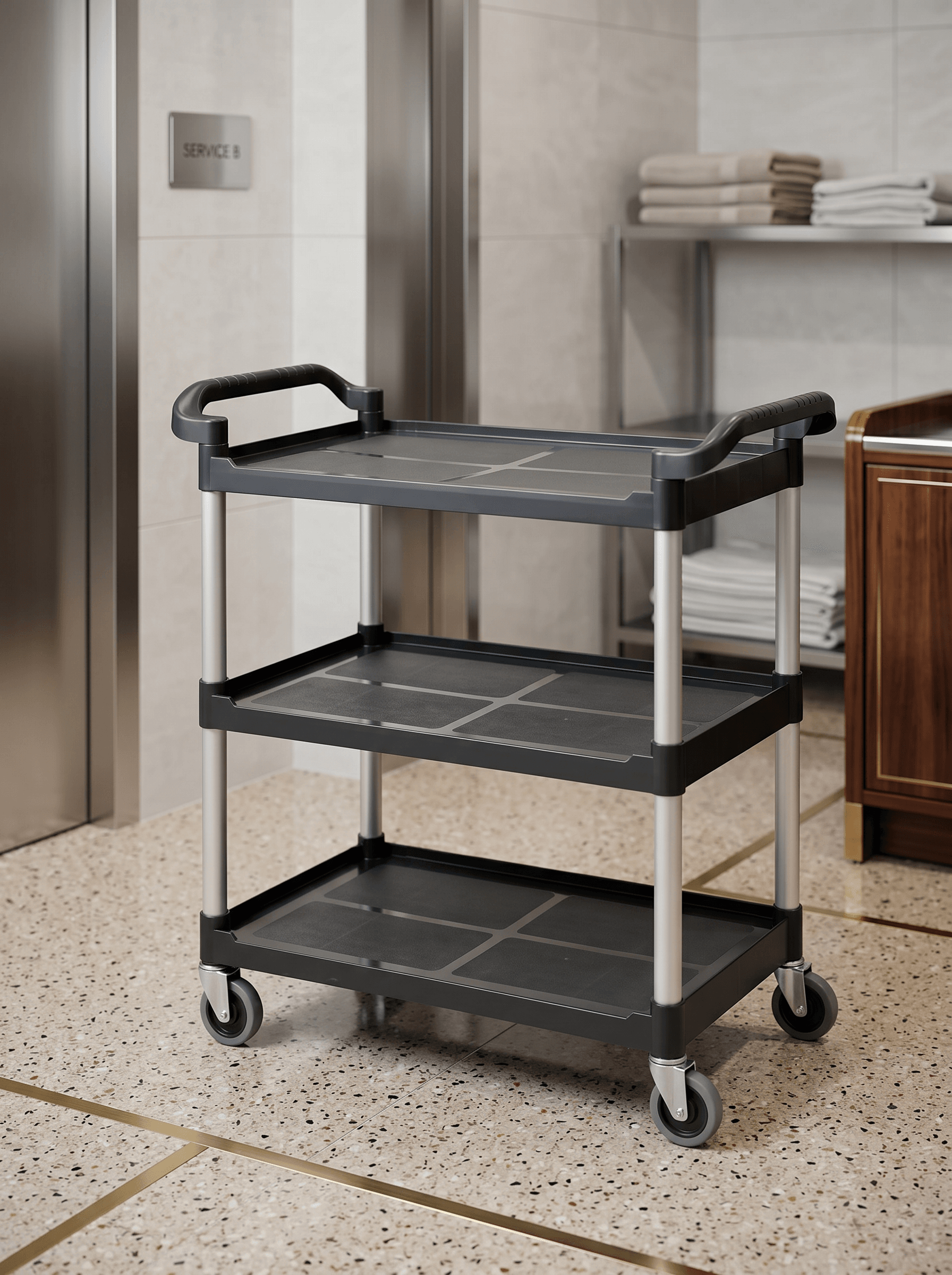
Service & Utility Trolleys
Two-tier and three-tier plastic service trolleys, including folding models, for F&B clearing, room service, and general utility use across hotel floors and back-of-house areas.
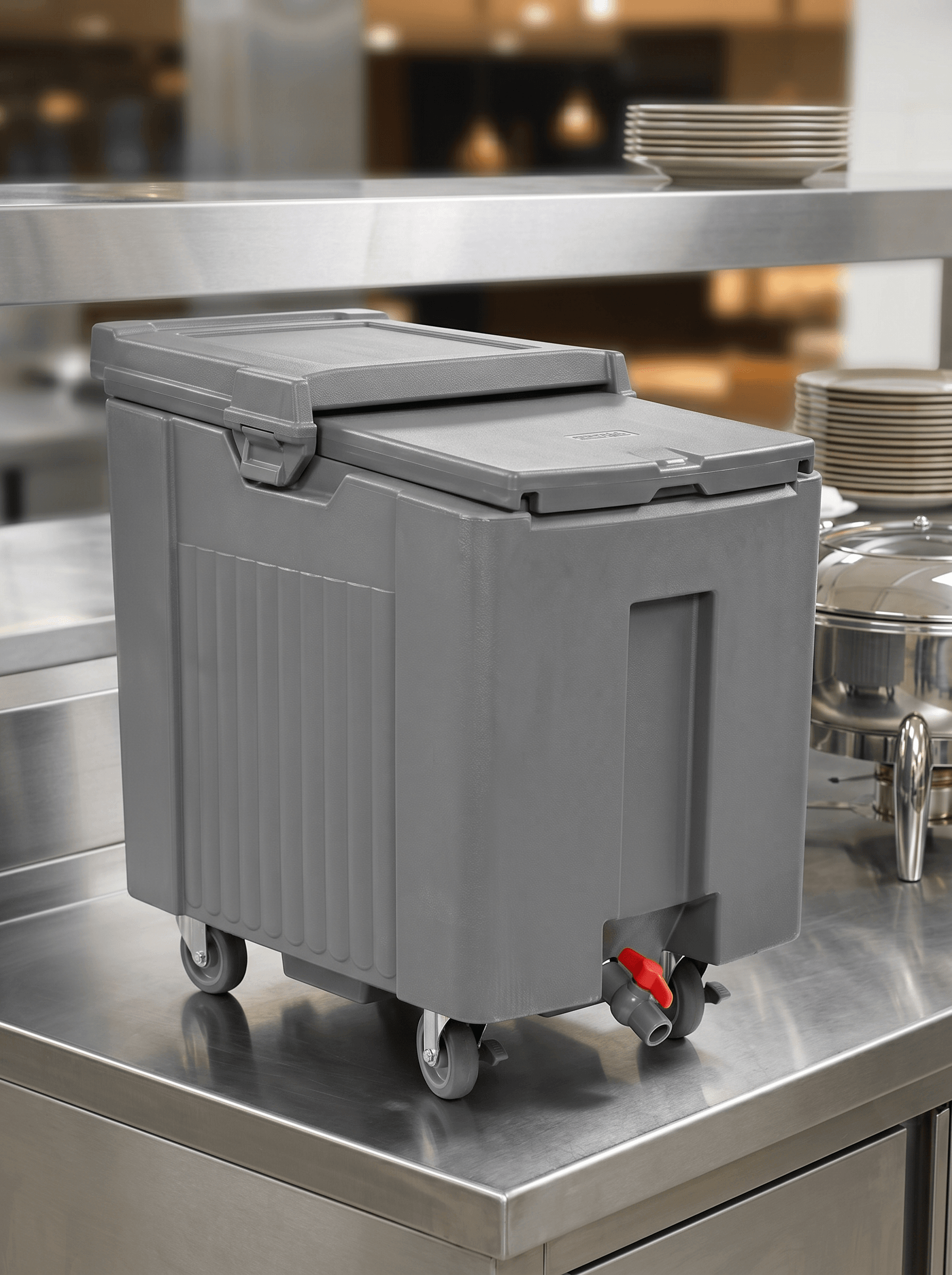
Insulated Food & Drink Carriers
Ultra pan carriers and insulated food boxes for banquet and outdoor catering, insulated drink dispensers/servers for hot and cold beverages, and dishlive caddies for plate and cutlery transport — keeping food at temperature during service and transfer.
Need pricing or availability? Send us a WhatsApp — our team responds within the hour.
WhatsApp for QuotePublic-Area & Recycling Bins
Bins for guest-facing and back-of-house zones — public-area and ashtray bins, plus multi-stream indoor and outdoor recycling stations. (In-room and washroom bins are on the Room Amenities page.)
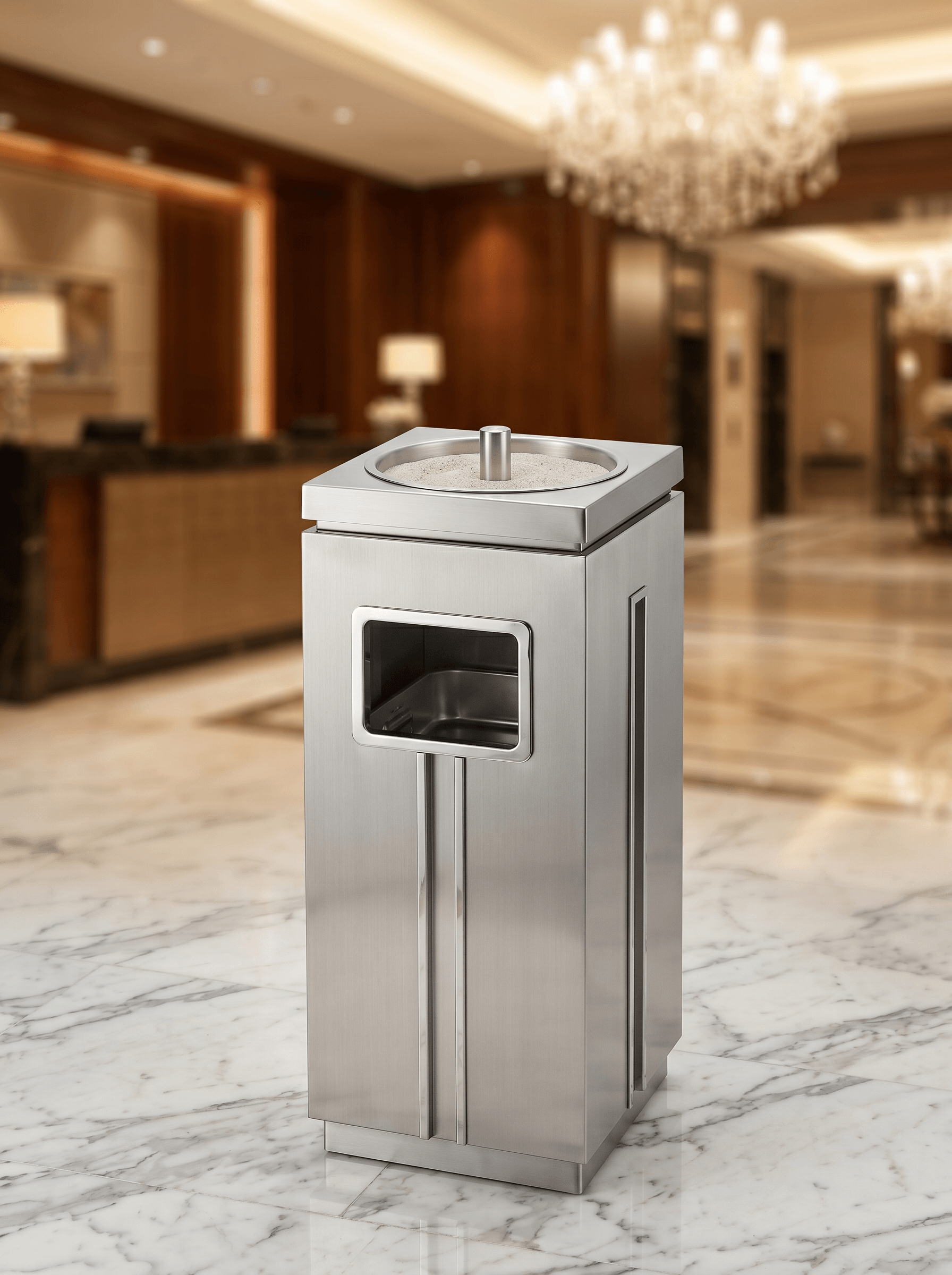
Public-Area & Ashtray Bins
Free-standing public-area bins and sand-top ashtray bins for lobbies, corridors, poolside, and entrances — in stainless steel, powder-coated, and wood-finish builds suited to high-traffic guest zones.
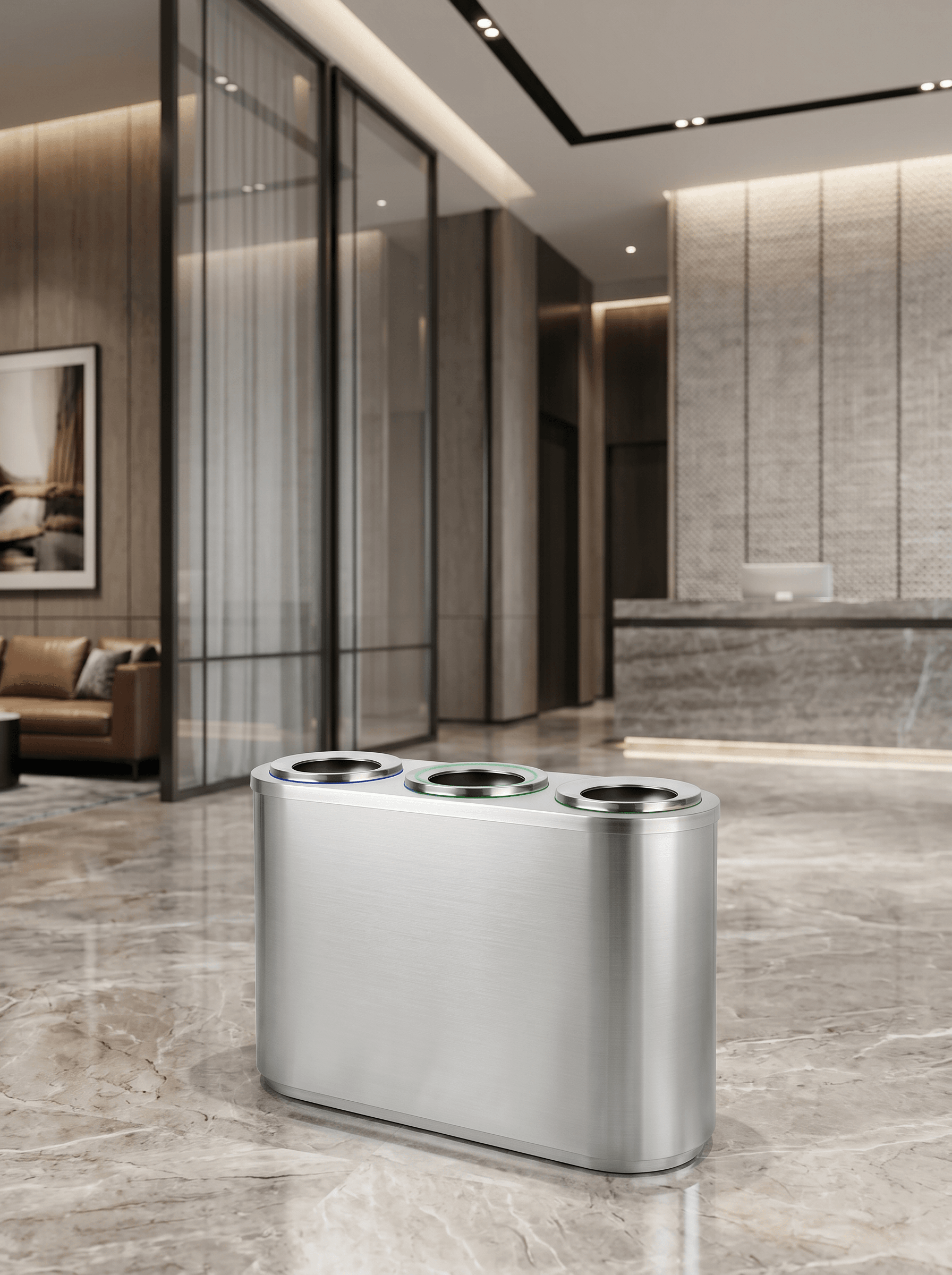
Indoor & Outdoor Recycling Bins
Multi-stream recycling stations (two, three, and four stream) with colour-coded apertures for lobbies and back-of-house, plus wall-mounted and free-standing outdoor bins for grounds, gardens, and resort recycling programmes.
Guest Flow & Signage
Equipment that organises and directs guests — retractable-belt queue managers, rope-and-post stanchions, sign stands, and podiums.
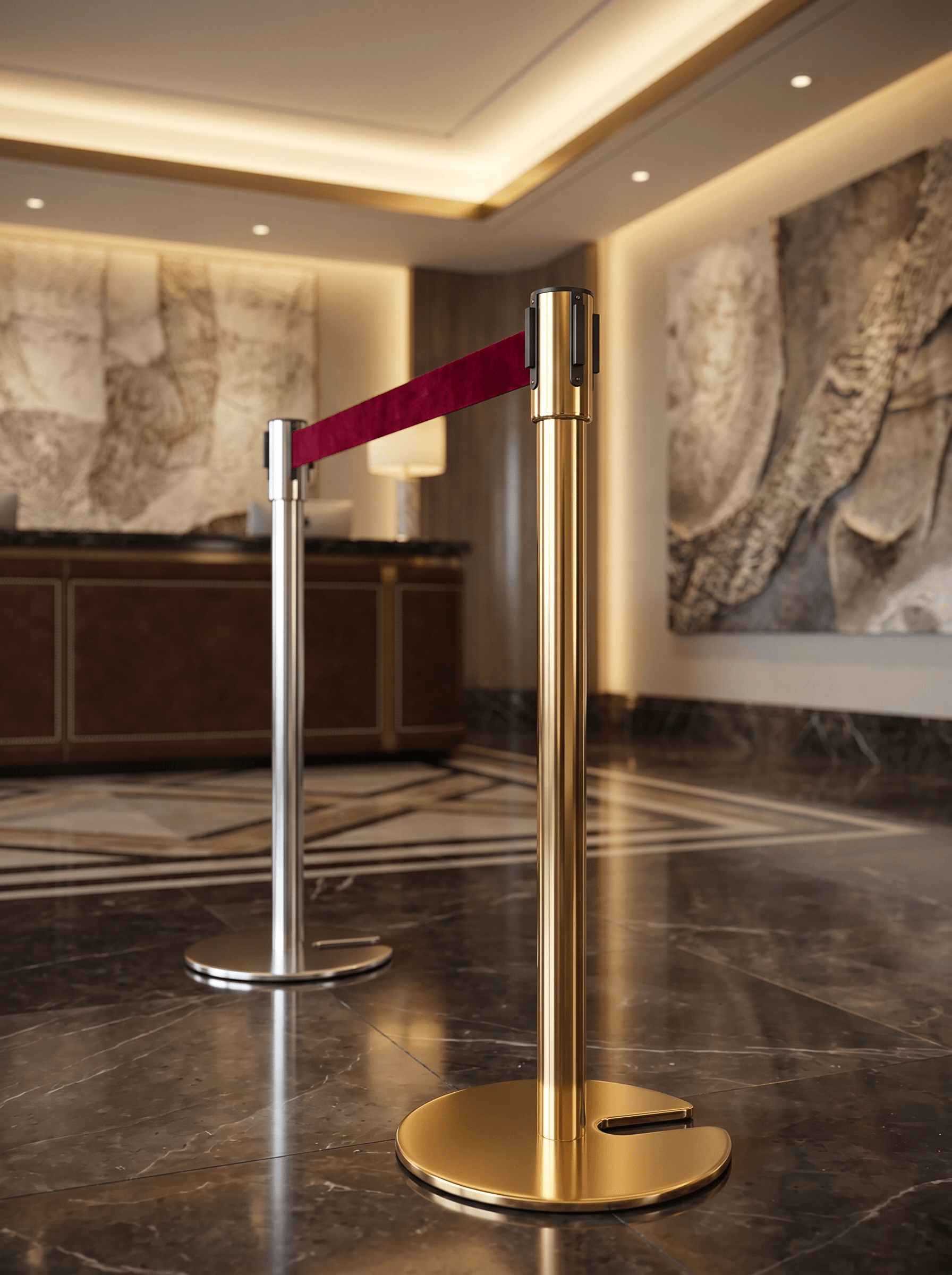
Queue Managers & Stanchions
Retractable-belt queue managers and classic rope-and-post stanchions for reception, banquets, and event flow — in silver, golden, black, antique brass, bronze, red bronze, and other finishes to suit your lobby. Custom-printed belt branding available.
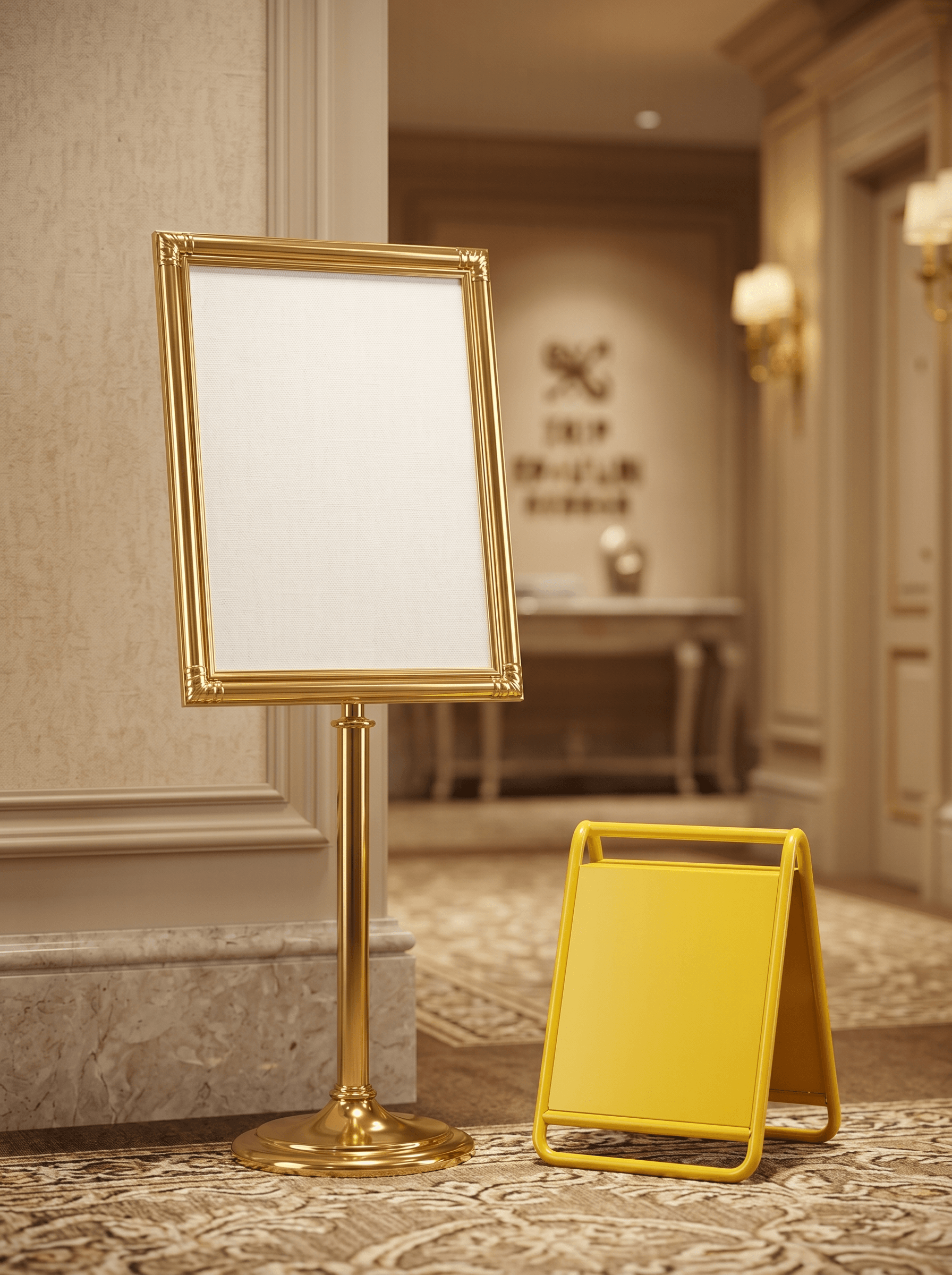
Sign Stands & Floor Signs
Floor sign stands, poster and information-display stands, parking-card stands, and folding wet-floor/caution signs for wayfinding, events, and safety notices in lobbies, banquet halls, and public areas.
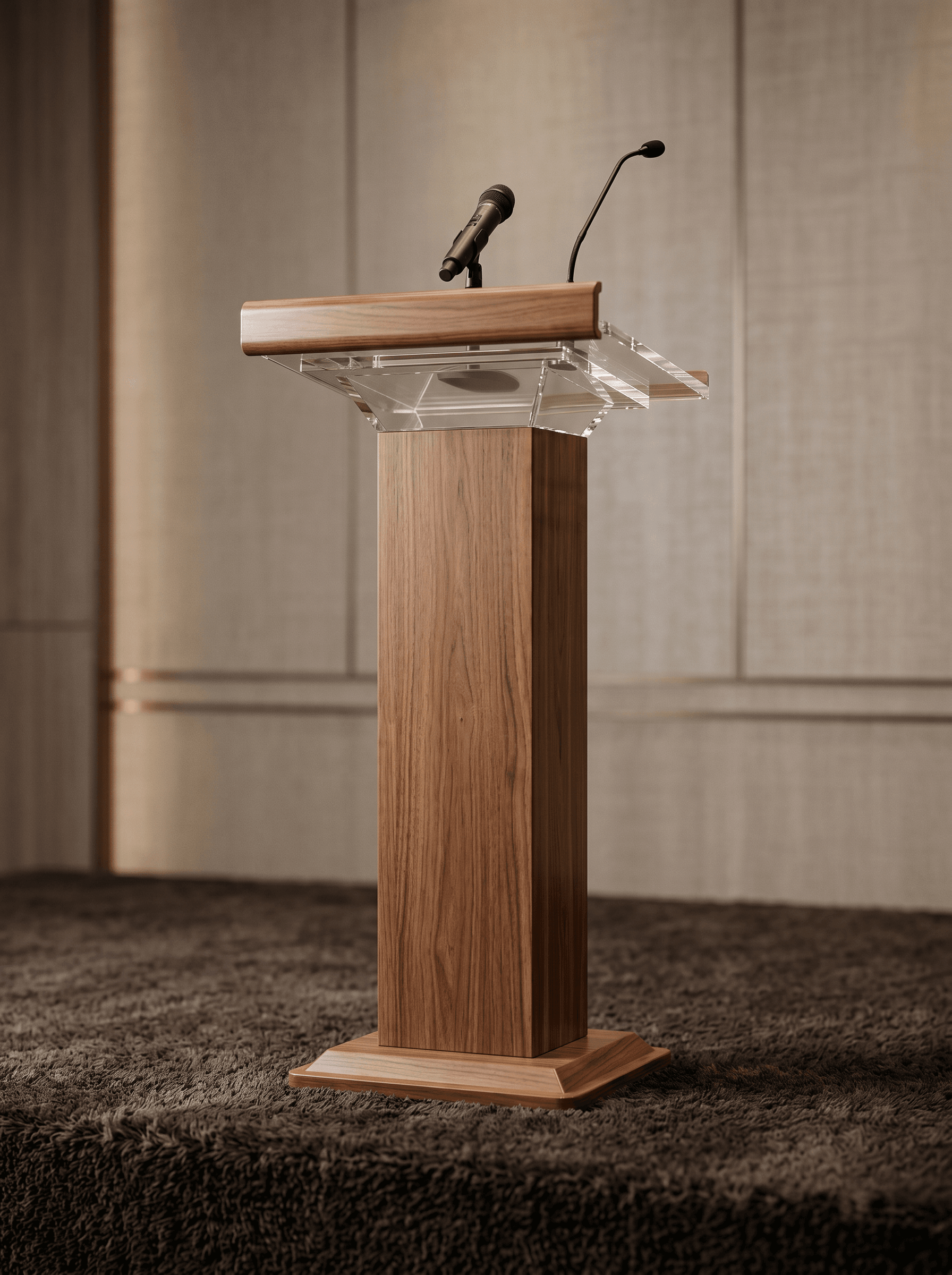
Podiums, Rostrums & Lecterns
Wooden and acrylic podiums, rostrums, and lecterns — with and without integrated displays — for banquet halls, conference rooms, and event stages.
Lobby & Operational Accessories
The finishing operational pieces — shoe-polish machines, umbrella holders, magazine stands, and folding extra beds.
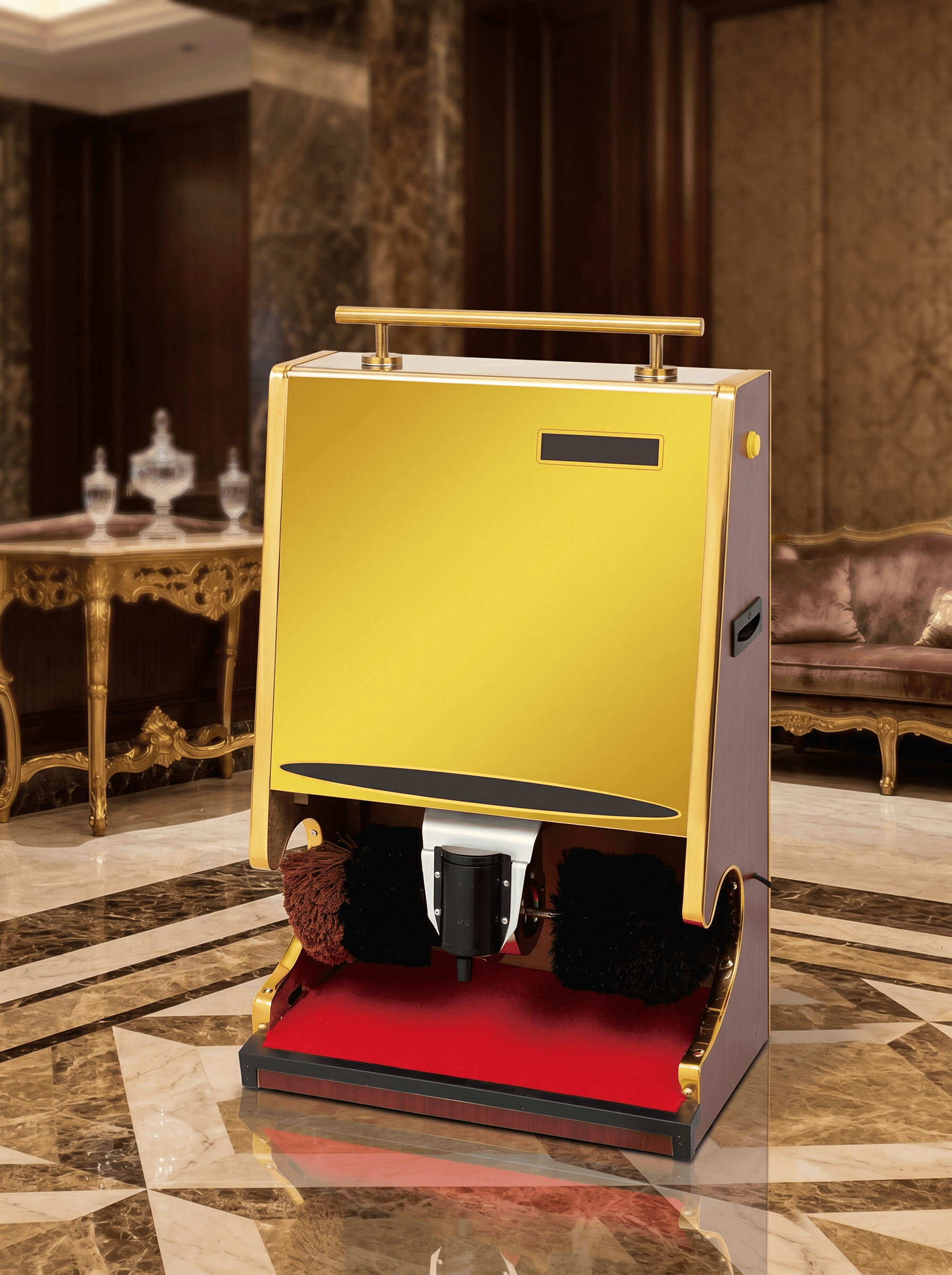
Shoe-Polish Machines
Automatic shoe-polish (shoe-shine) machines for lobbies, club floors, and corporate entrances — wall-mounted and free-standing models that keep guest footwear presentable.
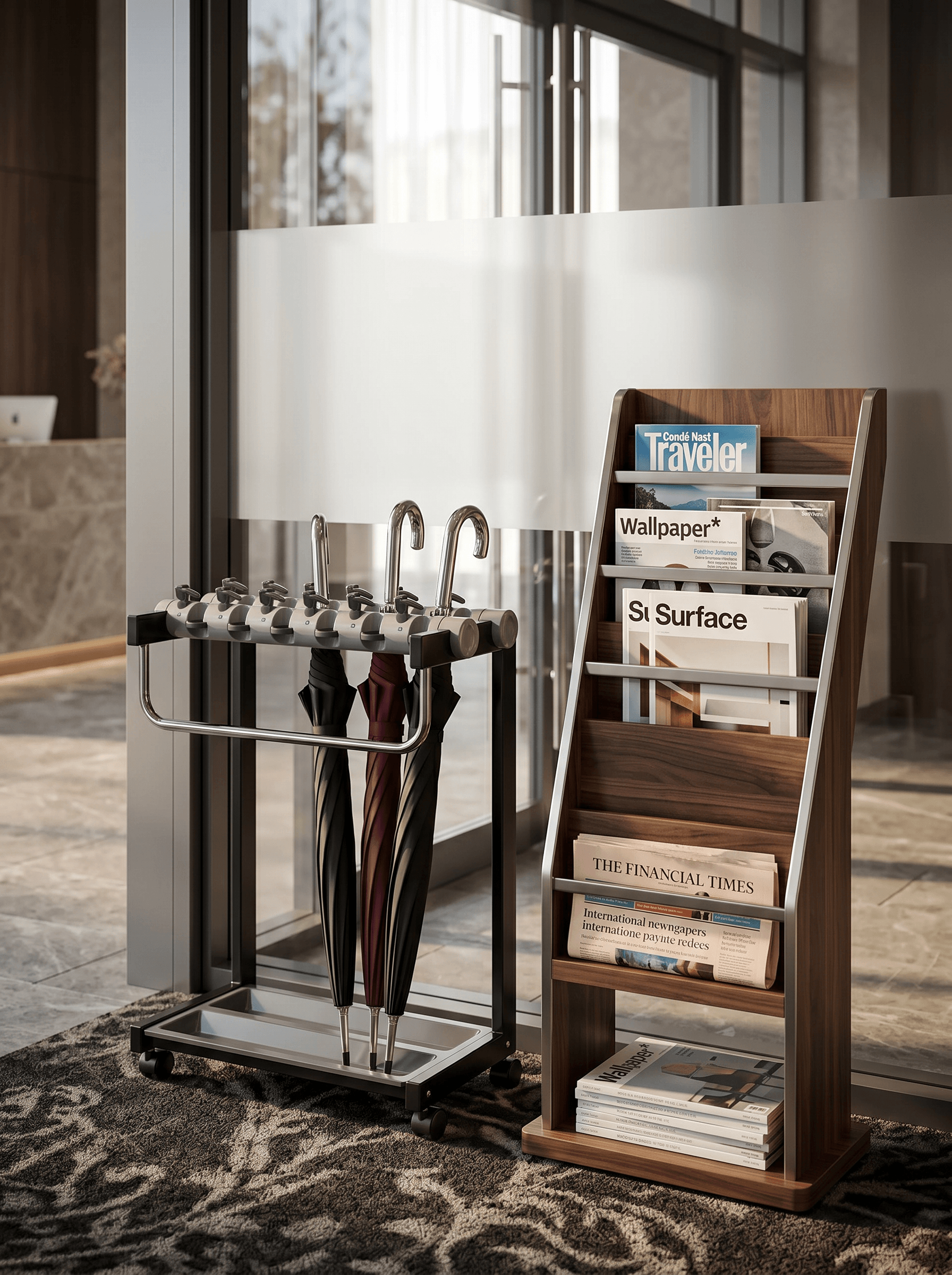
Umbrella Holders & Magazine Stands
Stainless steel and brass umbrella holders (including drip-tray and wrapper-dispensing models) for entrances, and magazine & newspaper stands for lobbies, lounges, and reading areas.
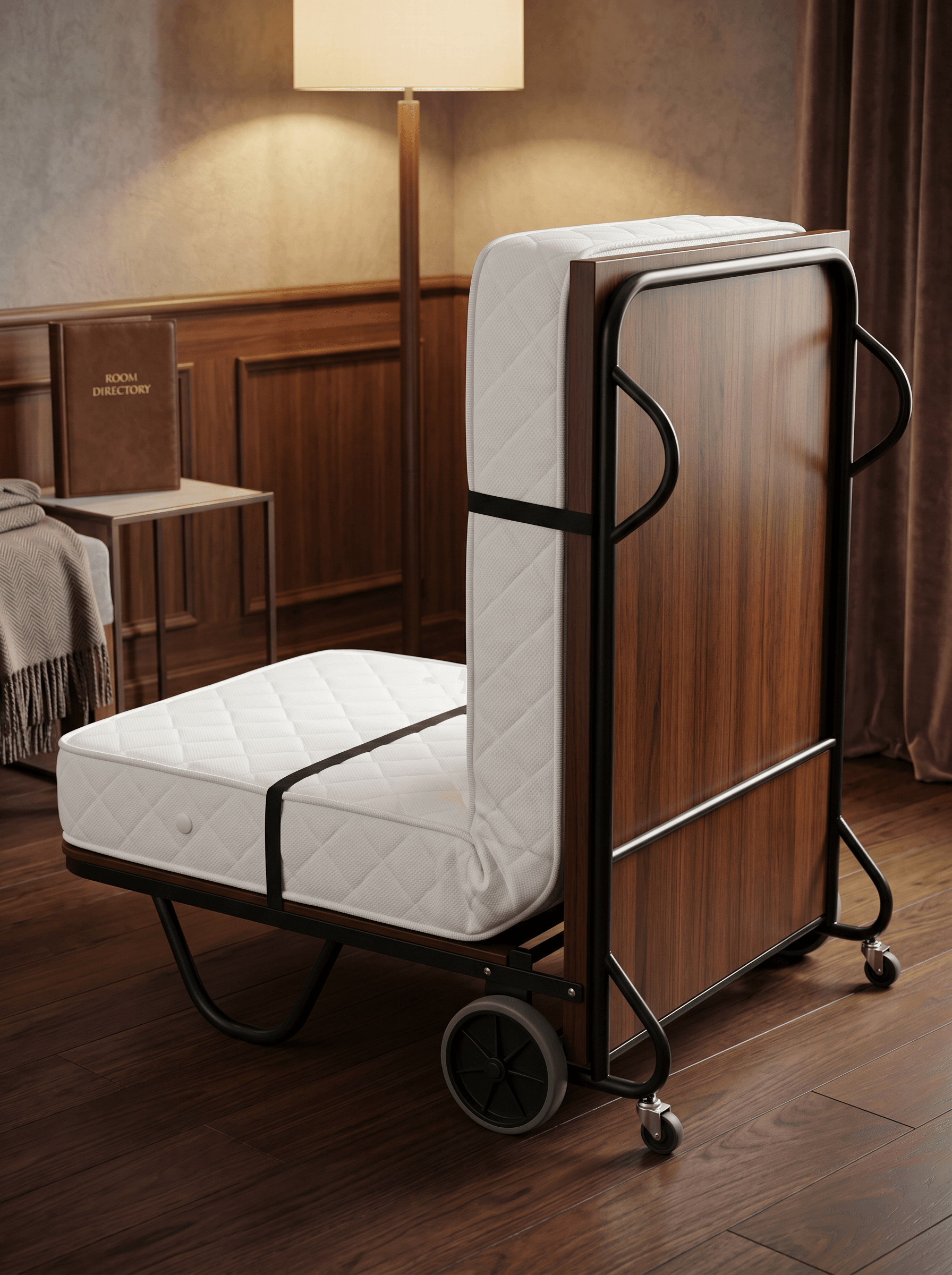
Folding & Extra Beds
Rollaway and folding extra beds for flexible occupancy and family rooms — with castors for easy movement and storage, sized for hotel guest-room use.
Need a product not shown here? Our range extends beyond this page — tell us your requirement and we'll source it.
WhatsAppWhy SGS Sales
What Makes Our Hotel Accessories Supply Different
Custom Logo Branding, No Minimum Order
Most lobby and guest-facing hardware can carry your hotel logo — bellman carts, luggage trolleys, queue-manager belts, and signage — with no minimum order quantity, so even a single branded piece is possible.
One Catalogue for the Whole Property
From the lobby to the laundry to the banquet hall, the full operational hardware range comes from one housekeeping-solution catalogue — letting you standardise finishes and consolidate vendors instead of sourcing piecemeal.
Specified for Hotel Operating Conditions
Stainless steel, brass, powder-coated, and heavy-duty plastic builds with hotel-grade castors and finishes — sourced for durability under daily use and consistent presentation, not consumer-grade hardware that wears out in a working property.
Frequently Asked
Questions buyers ask us
What hotel accessories does a property need beyond the guest room?
Operationally, a hotel needs bellman and luggage carts for the lobby, housekeeping and laundry trolleys for the floors, room-service and bar trolleys for F&B, public-area and recycling bins, and queue managers, signage, and podiums for guest flow and events. SGS Sales supplies all of these from one housekeeping-solution catalogue. (In-room fixtures like luggage racks and hangers are covered on the Room Amenities page.)
Can hotel carts and queue managers be branded with our logo?
Yes. Most lobby and guest-facing hardware — bellman carts, luggage trolleys, and queue-manager belts — is available with custom-logo branding, and with no minimum order quantity, so you can brand even small quantities to match your property identity.
What is the difference between a bellman cart and a luggage hand truck?
A bellman cart (or luggage trolley) is a wheeled, carpeted-deck cart used front-of-house to move guest luggage through the lobby, often in a decorative birdcage, SS Deluxe, or brass finish. A luggage hand truck is a simpler two-wheel porter truck used at the bell desk and back-of-house for heavier or bulk baggage.
Do you supply public-area and recycling bins for hotels and resorts?
Yes. The range covers public-area and ashtray bins for lobbies, corridors, and poolside, plus multi-stream indoor and outdoor recycling stations for grounds and back-of-house — so a property can standardise bins across every public zone. Guest-room and washroom bins are supplied through the Room Amenities page.
Do you deliver hotel accessories to properties in Uttarakhand and UP?
Yes. SGS Sales supplies hotel accessories and the full HORECA range to hotels across the Uttarakhand–UP belt — including Jim Corbett, Ramnagar, Nainital, and Moradabad — with a dedicated local supply relationship.