
The Short Answer on Compostable Disposables
Compostable disposables deliver genuine value in specific hotel contexts—outdoor banquets, high-volume buffets, and sustainability-reporting requirements—but they are not a straightforward replacement for traditional plastic or foam across every F&B operation. The decision comes down to three variables: your waste-handling infrastructure, your guest profile, and your per-unit cost tolerance. For properties in the Uttarakhand–UP belt, where municipal composting infrastructure remains limited, those variables often point toward a hybrid approach rather than a full switch.
This guide is written for hotel purchase managers and F&B heads who need to make a defensible, cost-conscious decision—not a marketing one.
What "Compostable" Actually Means for Hotel Use
Compostable packaging breaks down into organic matter under specific temperature and moisture conditions, but those conditions are rarely met in a standard hotel dustbin or landfill. True composting requires either industrial composting facilities or a managed on-site composting programme. Without one of those two end-points, a compostable paper plate disposed of in a mixed-waste bag behaves almost identically to conventional paper—it does not biodegrade rapidly, and it offers no environmental advantage over virgin or recycled paper.
This is not a reason to avoid compostables. It is a reason to audit your waste chain before purchasing them. Hotels that run a segregated wet-waste composting system—common in larger resort properties—can legitimately claim and realize the benefit. Properties without that infrastructure are better served by recycled-content paper products, which reduce upstream impact without depending on downstream processing that does not exist locally.
The term "biodegradable" on packaging is broader and legally looser. Most paper products are technically biodegradable given enough time. When evaluating a biodegradable hotel disposables supplier, ask specifically whether the product is certified compostable to a recognized standard, and whether that certification covers industrial composting, home composting, or both.
Category-by-Category: Where Compostables Win
Not every disposable category presents the same trade-off. Below is a practical breakdown by product type.
Paper Plates and Bowls
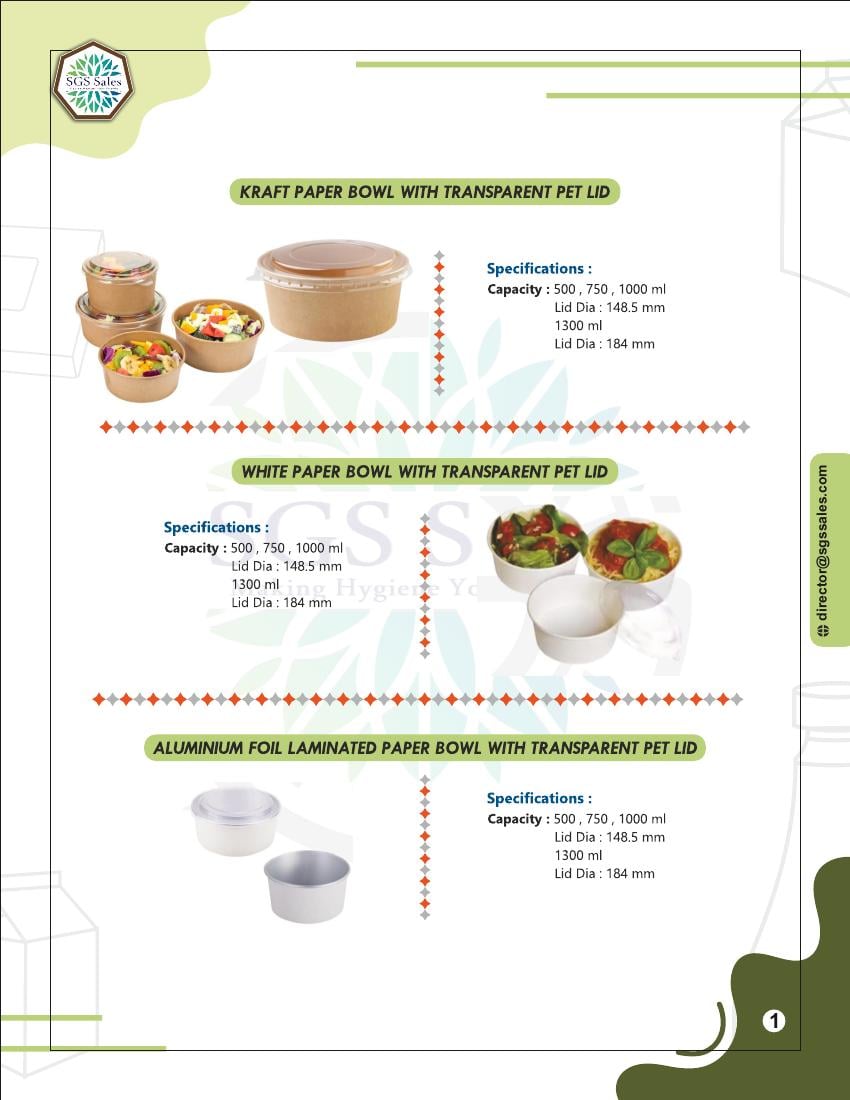
Compostable paper plates—particularly uncoated kraft or sugarcane bagasse formats—are the strongest category for hotel banquets. They hold dry and semi-dry foods reliably, they stack and transport cleanly, and their per-unit cost has fallen significantly as supply has scaled. For outdoor events, garden weddings, or pool-side dining where washing crockery is operationally impractical, bagasse plates are a credible premium alternative to foam or coated plastic. The visual quality of kraft and natural-finish plates also reads well at mid-to-upscale properties where presentation matters.
Where they underperform: high-moisture applications. Curry service, dal, or any liquid-heavy dish will compromise an unlined compostable plate within minutes. Coated compostable plates address this but often sacrifice the composting claim, since many coatings are not certified biodegradable.
Compostable Cutlery
CPLA and wooden cutlery are the two practical options. Wooden cutlery—birch or bamboo—is durable, widely available, and compostable without industrial processing. It suits breakfast setups, room-service trays, and casual dining. CPLA (crystallized polylactic acid) cutlery performs closer to conventional plastic but requires industrial composting to break down and costs more per piece. For most UP and Uttarakhand properties, wooden cutlery offers a better cost-to-impact ratio than CPLA unless you have confirmed composting infrastructure.
Paper Cups and Hot Beverage Containers
Standard paper cups for hot beverages use a thin PE (polyethylene) lining that makes them neither recyclable nor compostable in most municipal systems. Genuinely compostable hot cups use a PLA lining—they are available but carry a meaningful price premium. For tea and coffee service in large volumes, the cost difference accumulates quickly. A practical middle position: switch to compostable cups for outdoor or high-visibility guest-facing settings, and retain standard paper cups for back-of-house and staff pantries where the premium is not justified by guest perception.
Straws and Stirrers
Paper straws have become a near-universal switch at mid-to-upscale hotels, and for good reason—they are close to cost parity with plastic, the regulatory direction in India is unambiguous, and guests broadly expect it. This is one area where the transition is low-risk and straightforward. Paper stirrers and wooden stirrers follow the same logic.
Where Traditional Disposables Still Make Sense
Traditional disposables—coated paper, PP, and in some regulated uses, LDPE—remain the operationally correct choice in several hotel contexts.
- High-liquid F&B applications: Gravies, soups, and beverages at scale require containers that hold integrity under heat and moisture. Until compostable coatings scale to cost parity, coated paper or PP containers remain more reliable for these applications.
- Cold-chain and catering dispatch: Meals packed for off-site catering, staff canteens, or institutional contracts need structural durability over extended transit times. Compostable formats can fail in humid conditions during transport.
- Storage-intensive bulk procurement: Compostable formats typically have shorter shelf lives and greater sensitivity to humidity in storage. For properties with limited dry-storage or infrequent restocking cycles—common in Corbett and Ramnagar resort properties—this is a practical procurement constraint.
- Cost-constrained F&B contracts: Institutional and mid-scale food contracts where per-cover cost is the primary driver cannot absorb the premium of certified compostable ware across all categories. A selective approach—compostables for guest-visible touchpoints, conventional for back-of-house—is more sustainable as a business practice.
The Waste-Handling Reality in UP and Uttarakhand
Waste segregation and composting infrastructure in the Uttarakhand–UP belt is improving but uneven. Urban centres like Nainital and Dehradun have made more progress on municipal solid waste management than Ramnagar, Corbett buffer zones, or tier-3 towns in western UP. For properties in eco-sensitive zones—particularly those within or adjacent to the Corbett Tiger Reserve—waste management is also a compliance issue, not just an operational one.
Properties in these zones benefit from compostables differently than urban hotels. The argument is not about municipal composting access; it is about reducing plastic contamination risk in areas where waste occasionally enters natural drainage or forest boundaries. In that context, compostable or natural-material formats have a genuine environmental argument even without certified composting endpoints.
For properties in Moradabad, Noida, or Lucknow with access to wet-waste collection systems, the case for compostables strengthens—provided your housekeeping and F&B teams run disciplined waste segregation. Compostables mixed into dry-waste streams provide no benefit and may contaminate recyclables.
The Corbett Eco-Lodge Angle: Where the Premium Pays Back
There is one segment where the cost calculus flips from defensive to offensive: boutique eco-lodges in the Corbett, Ramnagar and Nainital belt. For a guest who booked a jungle property partly on its sustainability story, packaging is one of the most legible proofs that the story is real — a bagasse plate at a riverside safari breakfast, a kraft band on the towel set, seed-paper at turndown. A polystyrene lid sitting next to that undoes more than any lobby signage repairs. The highest-return switches cluster in the high-visibility, low-volume moments — outdoor and picnic service, buffet live-stations, and amenity wrapping — where the cost delta over conventional packaging is small but the guest impression is disproportionate. Properties that treat the switch as a brand investment rather than a compliance cost tend to hold or lift their average daily rate, and report it is one of the easier line items to defend to ownership, because the effect shows up in review sentiment before it shows up in occupancy. The per-unit premium is real; in this segment it buys positioning, not just disposal.
Building a Hybrid Purchasing Strategy
The most practical approach for most hotel properties is a tiered purchasing strategy rather than an all-or-nothing switch. Prioritize compostable or natural-material formats for guest-facing, high-visibility settings where presentation and sustainability perception matter. Retain conventional formats for high-moisture applications, back-of-house, and bulk institutional supply where cost and durability govern the decision.
A reliable eco-packaging supplier should be able to supply both categories without forcing a single-format commitment. SGS Sales supplies a full range of disposables and paper products for hotel and institutional use across the Uttarakhand–UP belt, with stocking at Moradabad and Noida for reliable lead times to Corbett, Ramnagar, Nainital, and western UP properties. Inquiries and product samples can be directed through our contact page.
Key Questions to Ask Before Switching
- What is your end-waste pathway? If you do not have wet-waste segregation and composting, certified compostables offer limited environmental return over recycled-content paper.
- What is the moisture load of your application? Dry and semi-dry food service is where compostables perform best.
- What does your guest profile expect? Eco-conscious leisure guests at Corbett resorts will notice and value compostable formats. High-volume banquet or institutional clients may not.
- What is your restocking frequency and storage environment? Compostables require dry, temperate storage and more frequent ordering cycles.
Answering these four questions will give you a clear brief for a purchasing conversation—and prevent a well-intentioned switch that creates operational problems without delivering its intended environmental benefit.